Faculty Development Programme
Ameliorate ’25, A Seven-day Faculty Development Programme
Date: 22 to 29 October 2025
The Department of Professional Management Studies organized AMELIORATE ’25, a seven-day Faculty Development Programme (FDP) focused on “Educational Transformation: Integrating AI Teaching Pedagogy and Research,” held from 22nd to 29th September 2025. The programme aimed to empower faculty members with cutting-edge knowledge and hands-on exposure to Artificial Intelligence applications in teaching, curriculum, assessment, and academic research. A total of 234 faculty members benefited from the programme, including 36 in-house participants and 198 external participants from various reputed institutions across India.
The FDP brought together distinguished resource persons who delivered expert sessions on diverse themes: AI concepts and opportunities, AI-enabled pedagogy, curriculum design, AI in academic research, ethical AI practices, project-based learning using AI tools, and leveraging AI for scientific research. Each session enriched participants with conceptual clarity, practical tools, case studies, hands-on demonstrations, and discussions on emerging trends and implementation challenges. The programme emphasized how AI can personalize learning, automate assessment, accelerate research, and support data-driven academic decision-making, while also highlighting the need for ethical and responsible AI use.
Participants gained insights into adaptive learning technologies, intelligent tutoring systems, digital teaching tools, automated assessment platforms, AI-supported curriculum mapping, literature review automation, predictive analytics, and research visualization tools. Special focus was placed on integrating AI into project-based learning and fostering creativity, critical thinking, and innovation among students. The ethical dimension of AI—data privacy, fairness, transparency, and algorithmic accountability—was emphasized to ensure responsible adoption of technology in education.
The programme received overwhelmingly positive feedback, with high ratings for resource persons, content relevance, scientific sessions, event management, and overall execution. Participants appreciated the practical value of the sessions and the opportunity to engage with experts and peers from multiple disciplines and institutions. The FDP successfully created a collaborative platform for knowledge sharing, networking, and the exchange of best practices.
The FDP significantly enhanced the AI literacy of faculty members, empowering them with actionable strategies to integrate AI into pedagogy, curriculum, and research. Participants reported improved confidence in using AI tools, designing AI-enhanced learning environments, and adopting innovative teaching and assessment practices. The programme successfully fostered a community of AI-aware educators prepared to lead educational transformation in their institutions.
Curriculum Workshop for faculty members
Date: 10 October 2025
The Department of Professional Management Studies and the Department of Management, under the School of Business and Management, Kristu Jayanti (Deemed to be University), organised a Curriculum Workshop for faculty members of the Department of Management and Professional Management Studies on 10 October 2025 at 11:00 a.m. in the H2 Lab, Second Floor, Humanities Block. 49 faculties from the Department of Management and the Department of Professional Management Studies attended the workshop. The workshop aimed to strengthen the academic framework and pedagogical design of the management programmes, aligning them with the university’s vision of excellence in higher education. It provided a collaborative platform for faculty members to review, update, and redesign the curriculum to meet current industry trends, emerging technologies, and contemporary educational standards. The session was facilitated by two esteemed resource persons, Dr Jisha V.G., Head, Department of Professional Management Studies, and Mr Suku T. Samuel, Head, Department of Management. Both resource persons shared valuable insights on curriculum innovation, academic planning, and effective delivery mechanisms to enhance student engagement and learning outcomes.
Dr Jisha V.G. emphasised the importance of maintaining academic rigour while integrating industry relevance into the curriculum. She discussed strategies for revising course content, incorporating experiential learning components, and aligning course objectives with programme outcomes and programme-specific outcomes. She also highlighted the need to align course content with the graduate attributes. Mr Suku T. Samuel focused on the significance of outcome-based education and the continuous process of curriculum development. He elaborated on assessment rubrics, programme mapping, and the use of digital tools for effective teaching and evaluation. His session encouraged faculty members to adopt innovative teaching methodologies that nurture critical thinking, creativity, and problem-solving skills among students. The interactive workshop fostered collaboration among faculty members, enabling the exchange of ideas and best practices. The workshop concluded with an open discussion where participants shared feedback and suggestions for refining course structures, learning objectives, and evaluation mechanisms. The Curriculum Workshop served as an important step toward continuous quality enhancement in teaching and learning. It reaffirmed the School of Business and Management’s commitment to academic excellence and its proactive approach in adapting to evolving educational and industry landscapes.
Session on Outcome Based Curriculum
Date: 30 August 2025
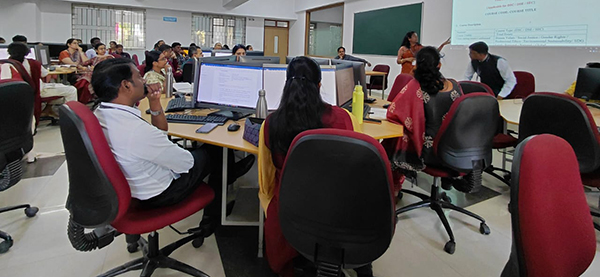
On 30th August 2025,Department of Management and the Department of Professional Management Studies, under School of Management Studies, Kristu Jayanti (Deemed to be University), organised a faculty development session on “Outcome-Based Curriculum”. The session was conducted from 11:00 a.m. to 12:00 noon at the H1 Auditorium, Humanities Block, and was designed to provide faculty members with a clear understanding of how to effectively design and implement curriculum within the framework of Outcome-Based Education (OBE). The resource persons for this session were Dr. Raja Kamal C. H., Associate Professor, and Dr. Diana Erudiyanathan, Assistant Professor, both of whom brought academic expertise and practical insights into the discussion.
The session began with an overview of the principles of OBE, which emphasises shifting the focus from teaching inputs to measurable learning outcomes. Dr. Raja Kamal highlighted that outcome-based curriculum design ensures that students not only gain subject knowledge but also acquire essential skills, values, and competencies required to succeed in professional and societal contexts. He underlined the significance of aligning Programme Educational Objectives (PEOs), Programme Outcomes (POs), Programme Specific Outcomes (PSOs), and Course Outcomes (COs) to establish a coherent academic framework that ensures consistency in student learning achievements.Following this, Dr. Diana Erudiyanathan elaborated on the practical aspects of curriculum implementation. She focused on pedagogical strategies that encourage active learning, such as project-based assignments, case studies, experiential activities, and interdisciplinary approaches. She further stressed the importance of assessment methods that capture higher-order thinking skills rather than rote learning, thereby ensuring that course outcomes are measurable, transparent, and aligned with programme objectives. Dr. Diana also explained the role of feedback systems, including inputs from industry stakeholders, alumni, and students, in keeping curricula dynamic and relevant. The resource persons collectively emphasised that OBE is not just a compliance requirement for accreditation but a student-cantered approach to education. They noted that curriculum design under OBE should prepare learners to be adaptable, innovative, and responsible citizens capable of thriving in a rapidly changing world. Faculty members were encouraged to actively engage in outcome mapping, review practices, and innovative teaching methodologies to create a meaningful academic environment.
The session concluded with an interactive discussion, where faculty members raised queries about challenges in designing outcome-based assessments and integrating them into existing structures. The resource persons addressed these concerns with clarity, providing practical strategies and examples. Overall, the session was highly impactful, equipping faculty with both theoretical understanding and practical tools to implement Outcome-Based Curriculum effectively in their teaching practices.
Faculty Enrichment Programme on OBE Frame Work
Date: 12 August 2025
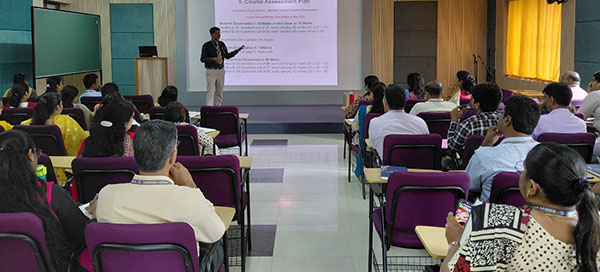
On 12th August 2025, Department of Professional Management Studies, under School of Management studies, Kristu Jayanti (Deemed to be University), organised a Faculty Enrichment Programme on OBE Framework. The session took place in the Council Room from 2:40 p.m. to 4:00 p.m. and was conducted by Dr. C. H. Raja Kamal, Assistant Professor, Department of Professional Management Studies. The programme was specifically designed to enhance the knowledge of faculty members in implementing Outcome-Based Education (OBE) practices and frameworks into curriculum planning and teaching methodologies. The session commenced with Dr. Raja Kamal providing a comprehensive introduction to the concept of OBE (Outcome-Based Education), explaining how it shifts the focus from traditional input-based teaching to a system that prioritises clearly defined and measurable outcomes. He stressed that OBE is not only an accreditation requirement under agencies such as NAAC and NBA but also a transformative approach that ensures students develop the necessary skills, knowledge, and values for personal and professional success.
Dr. Raja Kamal explained the hierarchical structure of outcomes, starting with Programme Educational Objectives (PEOs), followed by Programme Outcomes (POs), Programme Specific Outcomes (PSOs), and Course Outcomes (COs). He elaborated on the interconnections between these levels, highlighting how each course contributes to programme outcomes and, in turn, to broader institutional goals. This clarity, he emphasised, allows faculty to align teaching strategies and assessment tools to desired student achievements, ensuring both academic rigor and relevance. The session also touched upon the practical aspects of curriculum design under the OBE framework. Dr. Raja Kamal encouraged faculty members to adopt innovative teaching practices such as case-based learning, experiential projects, and collaborative assignments, which help students achieve higher-order learning outcomes. He also underlined the importance of assessment methods that go beyond rote memorisation to evaluate analytical, problem-solving, and ethical decision-making skills.
Furthermore, he pointed out the critical role of feedback systems in OBE. Feedback from students, alumni, and industry experts is vital in refining curriculum design, keeping learning outcomes aligned with the evolving needs of society and the job market. The session concluded with an engaging discussion, where faculty members raised questions regarding outcome mapping, assessment tools, and balancing theoretical content with practical applications. Dr. Raja Kamal addressed these queries with real-time examples and practical strategies.
Orientation Session on Graduate Attributes, POs and PSOs for faculty members
Date: 02 August 2025
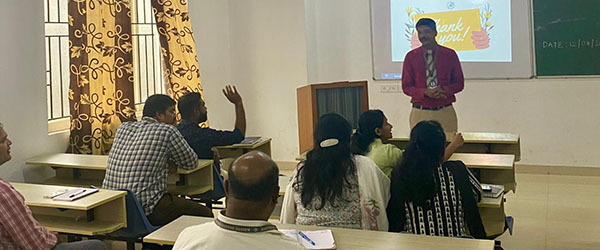
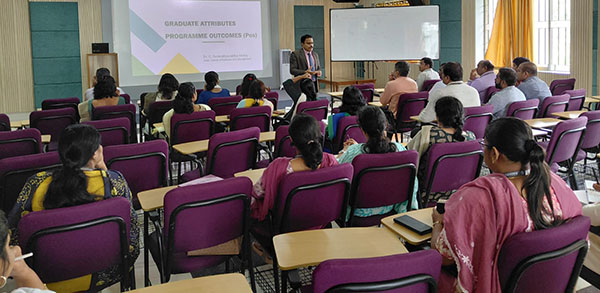
On 2nd August 2025, Department of Management and the Department of Professional Management Studies, under School of Management Studies, Kristu Jayanti (Deemed to be University) conducted an orientation session on “Graduate Attributes, POs & PSOs” for faculty members. The session took place at H201, Humanities Block at 11:00 a.m., and the resource person was Dr. C. Surendhranatha Reddy, Dean, School of Business and Management. The event aimed at aligning teaching practices with the principles of Outcome-Based Education (OBE) in line with UGC, NAAC, and NBA frameworks. Dr. Surendhranatha Reddy began by explaining graduate attributes as the core competencies and values students must acquire during their academic journey. He highlighted attributes such as critical thinking, ethical reasoning, communication, leadership, creativity, adaptability, and teamwork as essential for creating well-rounded graduates capable of contributing to professional and civic life. He noted that graduate attributes serve as global benchmarks for evaluating the effectiveness of higher education.
Moving further, he elaborated on Programme Outcomes (POs), which contextualise graduate attributes within specific disciplines. In business and management, for example, POs include the ability to apply theoretical knowledge in practice, make ethical decisions, develop entrepreneurial skills, and solve problems analytically. He emphasised that POs act as the backbone of curriculum design, ensuring that academic and co-curricular activities collectively contribute to student achievement. The discussion then shifted to Programme Specific Outcomes (PSOs), which focus on the unique objectives of individual programmes or specialisations. Dr. Surendhranatha Reddy illustrated this with examples: finance-focused programmes emphasise financial modelling and risk assessment, while marketing programmes may prioritise consumer behaviour analysis and digital strategies. These PSOs, he explained, differentiate programmes while still aligning with GAs and POs.
A critical part of the session addressed the role of faculty in mapping GAs, POs, and PSOs to teaching, assessment, and curriculum. Dr. Surendhranatha Reddy stressed the need for course outcomes (COs) linked systematically to POs and PSOs, supported by robust assessment tools. Such alignment ensures both academic rigour and accreditation compliance. Finally, Dr. Surendhranatha Reddy highlighted innovative pedagogical practices such as case-based learning, simulations, and experiential projects, alongside feedback from industry and alumni, to keep outcomes relevant. He also stressed embedding GAs across all student engagements, including internships, research, community service, and extracurriculars, thereby producing graduates who are both career-ready and socially responsible.
Workshop on Learning Management System
Date: 19 July 2025
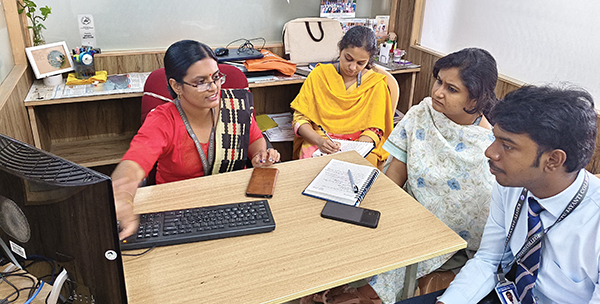
A comprehensive workshop on Learning Management System (LMS) was conducted for the new faculty members of the Department of Professional Management Studies to familiarize them with the Four-Quadrant Approach to digital content creation and delivery. The session aimed to promote blended and outcome-based teaching methodologies aligned with University standard norms was organised. New teachers were guided on preparing and uploading structured lesson notes in textual format. Focus was placed on content clarity, alignment with learning outcomes, and integrating images, references, and reading materials for better student comprehension. Followed by it the use of discussion forums as a tool for encouraging student engagement and peer learning. Techniques for moderating discussions, initiating reflective questions, and promoting collaborative thinking were demonstrated. The workshop successfully empowered the newly joined faculty members with the required skills to integrate technology into teaching. The four-quadrant model proved to be a structured and holistic method of course delivery, promoting both accessibility and effectiveness in learning.
Faculty Enrichment Programme on AI Tools for Research
Date: 01 July 2025
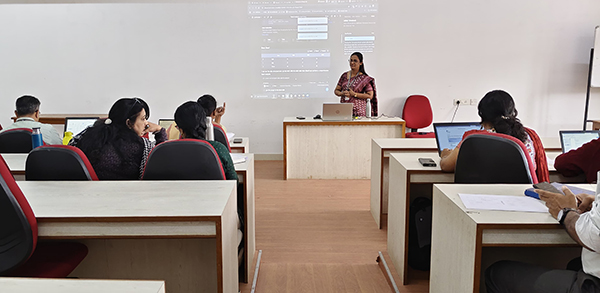
The Department of Professional Management Studies conducted a Faculty Enrichment Programme titled “AI Tools for Research” on July 1, 2025. The workshop aimed to enhance faculty members’ understanding of cutting-edge AI tools for research, academic writing, data analysis, and efficient literature access. Dr. A J Excelce, Associate Professor, led the session and provided hands-on training on platforms such as Connecting Papers, Julia AI, and ResearchRabbit.
The participants reported improved skills in managing research workflows, analyzing data, and integrating AI tools in teaching and supervision. The workshop fostered a robust research environment and promoted the use of technology in academic settings. Feedback from attendees indicated a high level of satisfaction, with 100% agreement on the workshop’s relevance and applicability.
The event was well-received, and most participants expressed interest in attending advanced sessions in the future.
Workshop On Intellectual Property Rights (IPR)
Date: 28 June 2025
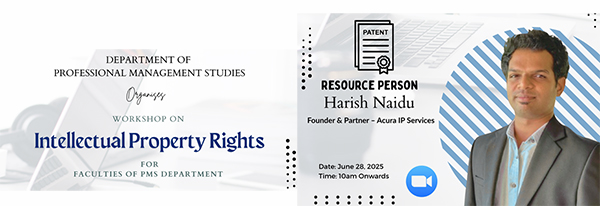
The online workshop on Intellectual Property Rights (IPR), held on 28th June 2025, brought together faculty members eager to learn how IPR influences modern scholarship and research culture, coordinated by Dr. A. J. Excelce and Dr. Jagdeep Singh. The event included twenty-two in-house faculty and aimed to boost innovation while familiarizing attendees with the legal steps needed to safeguard their creative output.
Mr. Harish Naidu, founder and partner at Acura IP Services, led the morning session from 10:00 to 11:00 and opened with real-world examples that made complex terms feel accessible. He walked participants through the main types of intellectual property-Patents, Copyrights, Trademarks, Geographical Indications, and Trade Secrets and explained the step-by-step process for filing patents or securing a copyright. His practical tips on timelines, costs, and common pitfalls were particularly well received.
The workshop's purpose was achieved, as participants developed a better understanding of IPR and its value to research. Faculty also improved their ability to recognize and safeguard different forms of intellectual property, learned how to apply legal contexts to them, and understood the ethical considerations underlying IPR. Finally, the session helped with thoughts of incorporating IPR into their teaching and research practices, consistent with national objectives for innovation.
Overall, the workshop provided a valuable context to support the development of the faculty's capacity, equipping them with both the basic knowledge, and practical components of the evolving field of intellectual property. The participants indicated they appreciated the informative and stimulating session, which helped make the workshop a great academic endeavor.