

Home / School of Biological & Forensic Sciences / Department of Life Sciences / M.Sc. Microbiology
The M.Sc. Microbiology programme provides comprehensive advanced training in microbial sciences, encompassing medical, environmental, industrial, and agricultural dimensions. The curriculum covers microbial genetics, pathogenesis, immunology, antimicrobial resistance, industrial fermentation, environmental microbiology, and research methodologies. Students gain hands-on expertise in the laboratory through advanced techniques, internships, and an independent research dissertation.
The programme equips graduates to address critical global challenges including infectious diseases, antimicrobial resistance, food safety, and environmental sustainability, preparing them for careers in clinical microbiology, pharmaceutical research, environmental agencies, and academic institutions.
Advanced study of microbial pathogenesis, antimicrobial resistance, clinical diagnostics, and industrial fermentation.
Focus on microbial ecology, bioremediation, wastewater treatment, and sustainable environmental solutions.
Hands-on research training through projects, seminars, industry internships, and capstone dissertations.
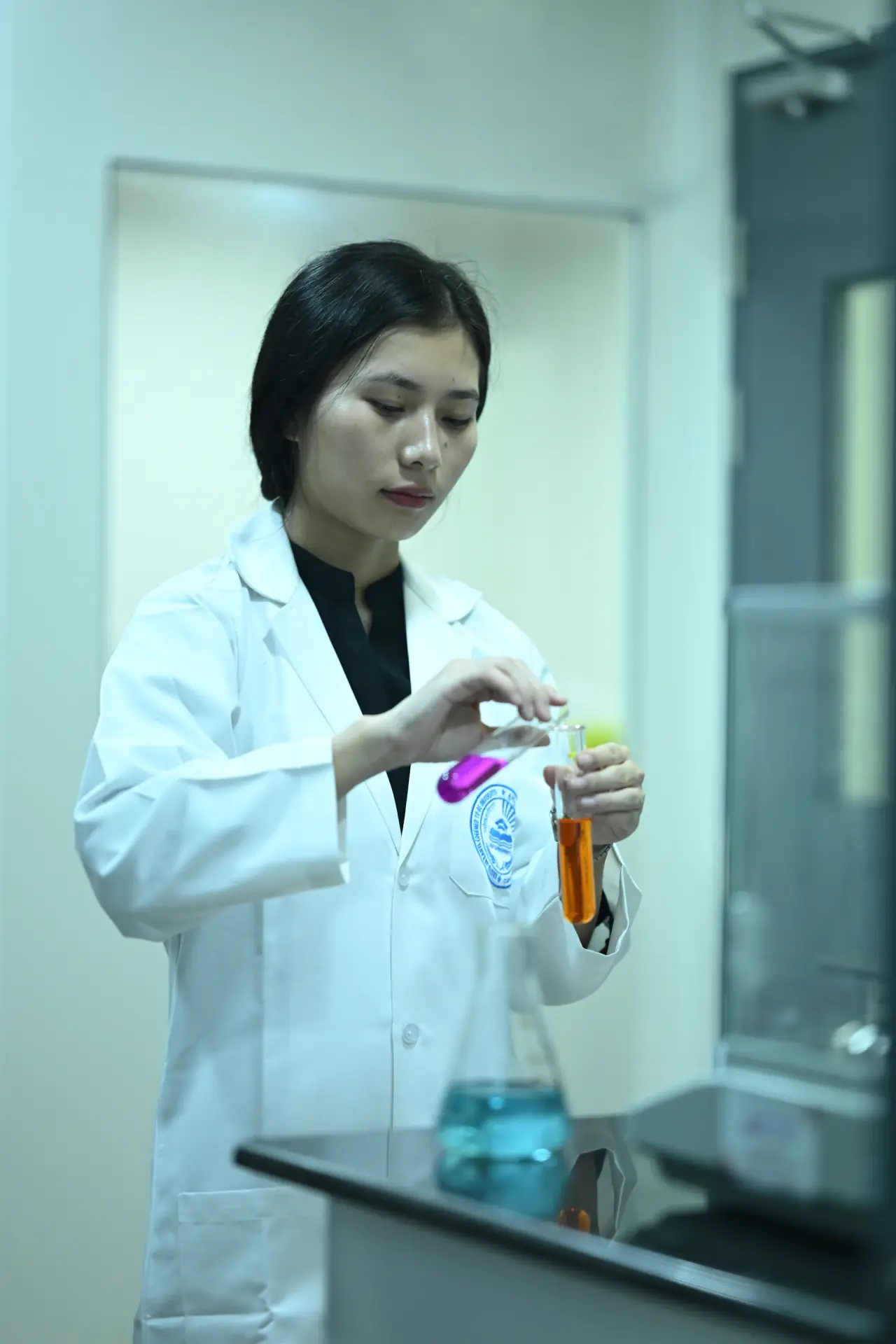
Comprehensive postgraduate education exploring microbial mechanisms, infectious disease pathology, and biotechnology applications.
Programme Title: M.Sc. Microbiology
Specialization: Medical Microbiology, Industrial Bioprocesses, Microbial Genomics
Duration: 2 Years (4 Semesters)
Study Mode: Full time
Core Academic Focus Areas: Microbial genetics and genomics, Pathogenic microbiology and immunology, Industrial fermentation and bioprocesses, Environmental and agricultural microbiology, Antimicrobial resistance, Research methodology and biostatistics
Practicals & Hands-On Training: Aseptic Techniques & Microbial Identification, Microbial Genetics & Gene Mapping, Immunological Assays, Industrial Fermentation Lab, Environmental Sampling & Analysis, and Research Dissertation
Learning Pathway: IPR and Biosafety, Elective Specializations (Medical, Industrial, or Environmental), Bioinformatics Applications, and Independent Research Dissertation.
M.Sc. Microbiology — semester-wise course distribution.
Review the mandatory academic qualifications and minimum score criteria required for admission.
Candidates with a Bachelor
Looking for a programme that matches your interests?
Find Programmes by InterestTargeted competencies and practical mastery achieved by graduates throughout their academic journey.
PSO1: Apply advanced knowledge of microbial diversity, genetics, pathogenesis, and industrial processes to address real-world microbiological challenges.
PSO2: Demonstrate proficiency in advanced microbiological laboratory techniques, diagnostic methods, and data interpretation.
PSO3: Design and conduct ethical, rigorous research in microbiology, contributing to new knowledge in clinical, environmental, or industrial domains.
PSO4: Apply microbial principles to sustainable environmental solutions, healthcare diagnostics, and industrial innovations.
Key strengths, experiential learning, and strategic career advantages offered by the programme.
The M.Sc. Microbiology programme provides advanced theoretical and experimental training in pathogenic microbiology, virology, immunology, industrial fermentation, and microbial ecology.
At Kristu Jayanti University, the programme addresses critical contemporary challenges including antimicrobial resistance (AMR), vaccine development, industrial bioprocesses, and environmental bioremediation through intensive research dissertations.
Choosing this programme enables students to:
With state-of-the-art laboratory infrastructure, esteemed faculty mentorship, and active industry collaborations, graduates are empowered for leadership across research institutions, healthcare enterprises, and global academic environments.